History of the Dhow: From Trading Vessel to Luxury Cruise
The story of the dhow is closely connected to the history of Dubai, the Arabian Gulf and the wider Indian Ocean. For generations, these traditional vessels carried merchants, fishermen, pearl divers and travellers between coastal communities. They transported goods, supported livelihoods and helped connect ports across the region. Today, the dhow remains an important symbol of maritime heritage, while modern versions welcome visitors for sightseeing and dining. Understanding the dhow boat history Dubai offers a fascinating look at how a traditional working vessel became part of the city's tourism experience.
What Is the History of the Dhow Boat in Dubai?
Dhows are traditional wooden vessels associated with maritime communities around the Arabian Gulf, the Arabian Sea and the Indian Ocean. In Dubai, they played an important role in fishing, pearling, coastal transport and trade. The city's historic Dubai Creek became a key centre for boats and merchants. Although engines and modern shipping changed maritime trade, dhows remain part of Dubai's heritage and are now also used for leisure cruises, sightseeing and dinner experiences.
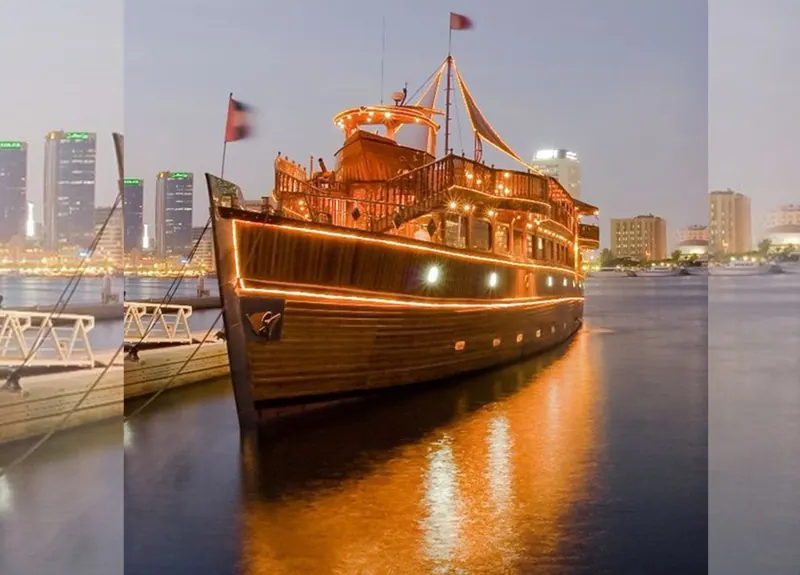
1. What Is a Traditional Dhow?
A dhow is a traditional type of vessel associated with the maritime cultures of the Arabian Peninsula and the Indian Ocean. The word is often used as a general term for several kinds of traditional boats rather than one single design. Dhows varied in size, shape, construction and purpose according to the waters they sailed, the goods they carried and the work they performed.
Traditional dhows were commonly built using wooden planks and designed to work in coastal waters and on longer trading routes. Many used lateen sails, which have a distinctive triangular shape, to make use of available winds. Their construction and rigging reflected generations of practical knowledge developed by shipbuilders and sailors.
It is important to recognise that the history of the dhow is not limited to one country or a precisely established date of origin. Similar maritime traditions developed across a wide region, with boat designs and techniques changing through contact between Arab, Persian, Indian and East African coastal communities.
Traditional Construction
Wood, rope, sealing materials and skilled craftsmanship were essential to the building and maintenance of many traditional vessels.
Wind-Powered Travel
Sails allowed crews to use seasonal winds for fishing, coastal journeys and trade across the Arabian Gulf and Indian Ocean.
Different Boat Types
Traditional vessels came in different forms, including boats used for fishing, pearling, passenger transport and commercial cargo.
A Living Heritage
Dhows continue to represent the relationship between coastal communities, the sea, traditional craftsmanship and regional commerce.
2. The Early History of Dhows and Indian Ocean Trade
The maritime history behind the dhow developed over many centuries. Communities around the Arabian Peninsula, the Persian Gulf, the Indian subcontinent and East Africa relied on the sea to exchange goods, travel between settlements and maintain commercial relationships.
Sailors learned to work with seasonal wind patterns, including the monsoon systems of the Indian Ocean. Understanding the timing and direction of these winds helped crews plan voyages between different ports. Maritime knowledge was passed down through generations and included navigation, weather observation, vessel maintenance and the management of supplies during a journey.
The ships used for these journeys were not all identical. Different coastal regions developed vessels suited to their own conditions and needs. Over time, trade and migration encouraged the exchange of construction methods, sailing practices and maritime terminology.
Dhows became associated with a broad commercial network connecting ports across the Arabian Gulf, the Arabian Sea, the western coast of India and East Africa. Depending on the route and period, vessels could carry dates, timber, fish, textiles, spices and other merchandise. The movement of goods also encouraged cultural exchange, as sailors and merchants met people from different languages and traditions.
3. Why Dhows Were Important to Dubai's History
Before Dubai developed into the modern international city it is today, the sea was central to the livelihoods of its coastal communities. Fishing, pearl diving, boatbuilding and maritime trade provided work and connected residents with other settlements around the Gulf and beyond.
Dubai Creek was particularly important. Its sheltered waterway supported the movement of boats and helped establish a commercial environment around its shores. Merchants, sailors and craftspeople contributed to the area's economic life, while markets on land provided places to sell, purchase and distribute goods brought by sea.
The historic districts around the creek, including Deira, Bur Dubai and Shindagha, developed in close relationship with the waterfront. The creek connected communities and commercial areas on its banks, making boats an essential part of everyday movement as well as long-distance trade.
Traditional wooden vessels helped carry merchandise between Dubai and other regional ports. Their role was practical as well as economic: boats supported the movement of people, helped sustain families and linked Dubai to the wider maritime world.
Dubai Creek: A Centre of Maritime Activity
Dubai Creek remains one of the clearest places to understand the city's maritime past. Traditional wooden boats still operate in and around the historic waterway, although modern engines and contemporary commercial practices have changed how many of them work.
The creek's importance is also visible in the surrounding urban landscape. Historic trading areas, traditional markets and heritage buildings help tell the story of a city whose growth was closely connected to the water. Visitors interested in this side of Dubai can explore the Dubai Creek cruise experience to see the historic waterway from a different perspective.
4. Dhows, Pearl Diving and Traditional Livelihoods
One of the most significant parts of the dhow boat history in Dubai and the wider Gulf is the pearl-diving industry. Before the development of the modern oil economy, natural pearls were an important source of income for many coastal communities.
Pearl-diving expeditions required specialised boats and coordinated crews. Divers, boat captains and other workers performed different tasks during the season. The vessels carried people and supplies to pearl banks, where divers collected oysters from the seabed. The work was physically demanding and could involve considerable risks.
Traditional maritime life also included fishing, which supplied food and supported local trade. Smaller vessels were used for nearshore activities, while larger boats could serve different commercial or seasonal purposes. Shipbuilding and repair were essential to this way of life because wooden boats required regular maintenance.
Life at sea depended on cooperation and accumulated experience. Sailors needed to understand weather, currents, equipment and the responsibilities of each crew member. Songs, spoken traditions and practical knowledge helped preserve maritime culture and strengthened the bonds between people who worked together.
The decline of the natural pearl trade during the early twentieth century brought significant economic changes to the Gulf. As new economic opportunities emerged, the role of traditional boats also began to change. Nevertheless, the legacy of pearling remains an important part of the region's cultural identity.
5. How Traditional Dhows Were Built
Traditional dhow building was a specialised craft. Shipbuilders needed to select suitable timber, shape the planks, assemble the hull and ensure that the finished vessel could withstand the demands of its intended use. The exact methods and materials varied according to local traditions, the type of boat and the resources available.
In parts of the Gulf, builders used imported wood alongside locally available materials. Traditional techniques could include fitting wooden planks to form the outer hull before adding internal structural elements. Rope, fibres and sealing materials played important roles in some construction traditions.
Building a seaworthy vessel required more than following a fixed design. Craftspeople relied on experience to judge the shape of the hull, the balance of the vessel and the strength needed for its intended journey. Repairs and maintenance were equally important because exposure to seawater, heat and changing weather gradually affected wooden boats.
| Traditional Element | Purpose |
|---|---|
| Wooden hull | Provided the main body of the vessel and was shaped according to its intended use. |
| Sails and rigging | Allowed crews to harness wind power and control the vessel while sailing. |
| Ropes and fibres | Were used in various traditional construction, fastening and rigging methods. |
| Sealing materials | Helped reduce water entering through joints in the wooden hull. |
| Shipbuilder's skill | Connected practical knowledge of materials, balance, repair and seaworthiness. |
Boatbuilding knowledge was often passed from experienced craftspeople to younger generations. This made the craft an important part of the region's intangible cultural heritage. Preserving traditional boatbuilding helps keep these skills and the stories associated with them alive.
6. From Sailing Vessels to Motorised Cargo Boats
The introduction and spread of engines transformed the operation of traditional vessels. Motorisation reduced dependence on wind alone and gave operators greater flexibility over departure times and routes. Many wooden boats retained their traditional appearance while adopting modern propulsion and other practical modifications.
As roads, ports, modern shipping and other transport systems expanded, the commercial environment around Dubai changed. Large-scale logistics increasingly relied on modern vessels and infrastructure, while traditional boats continued to serve selected cargo routes and local purposes.
This transition did not erase the dhow's role in regional commerce. Motorised wooden cargo boats continued to connect Dubai with nearby markets and ports. Their continued presence illustrates how a traditional vessel can adapt to changing economic needs without losing all the characteristics of its earlier design.
At the same time, fewer people depended exclusively on traditional sailing and wooden boatbuilding for their livelihoods. As a result, preserving the knowledge of experienced boatbuilders and sailors became increasingly important for cultural heritage.
7. How the Dhow Became a Luxury Cruise Experience
The modern dhow cruise represents a new chapter in this maritime story. Instead of transporting cargo or supporting fishing and pearling, many contemporary dhow experiences are designed for sightseeing, dining and leisure.
Operators have adapted traditional boat-inspired designs to accommodate visitors. Depending on the vessel, a cruise may feature indoor seating, an open-air deck, dining areas and facilities intended for passenger comfort. Some boats retain a traditional wooden appearance, while others use contemporary construction and styling inspired by historic dhows.
Dinner cruises combine the experience of being on the water with a meal and views of the city. Guests may be able to enjoy buffet dining, soft drinks and entertainment, depending on the package. The exact features differ between providers and should be confirmed before booking.
Dubai's modern waterfronts have also expanded the settings in which visitors can enjoy a cruise. The historic creek offers a connection to the city's trading past, while newer waterfront districts present a different view of the city's development. In this way, the dhow has become both a leisure attraction and a reminder of Dubai's maritime roots.
Traditional Heritage
The dhow's form and history connect modern visitors with generations of regional seafaring, trade and craftsmanship.
Modern City Views
Contemporary cruise routes let passengers experience Dubai's waterfront architecture from the water.
Dining on Board
Selected cruises combine sightseeing with dinner, creating a shared evening experience for visitors and residents.
A Different Perspective
A cruise provides opportunities to photograph the waterfront and appreciate how the city developed around its waterways.
8. Where Can You Experience Dhow Cruises in Dubai?
Visitors can explore different cruise settings depending on the type of scenery and atmosphere they prefer. Each route offers a distinct perspective on Dubai, although the actual sights depend on the itinerary, departure point and operating conditions.
Dubai Creek: Explore the Historic Waterfront
Dubai Creek is a natural starting point for anyone interested in the historical connection between dhows and the city. The waterway is associated with traditional trading areas, maritime activity and the development of Dubai's early commercial districts. A cruise here offers a way to appreciate the relationship between the creek and the surrounding historic neighbourhoods.
Learn more about the Dubai Creek dhow cruise.
Dubai Marina: Traditional Inspiration Meets Modern Scenery
Dubai Marina presents a very different waterfront setting. Its contemporary skyline, high-rise buildings and developed promenade provide a modern contrast to the older trading areas associated with traditional dhows. A cruise in this area may appeal to visitors who want to enjoy the city's modern architecture from the water.
Explore the Dubai Marina cruise experience.
Dubai Canal: A Modern Urban Waterway
Dubai Water Canal offers another perspective on the city's evolving relationship with its waterways. Modern buildings, bridges and waterfront developments create a different atmosphere from the historic creek. For visitors interested in contemporary city views, it can be an alternative to a heritage-focused cruise.
Discover the Dubai Canal cruise.
9. Why the History of the Dhow Still Matters Today
The dhow is more than a type of boat. Its history reflects the skills, work and experiences of the people who lived along the Arabian Gulf and the Indian Ocean. Sailors and merchants helped connect communities, while divers, fishermen and boatbuilders developed specialised knowledge that supported local economies.
The continued presence of traditional wooden boats in Dubai helps make this history visible. They provide a connection between the city's historic waterfront and its contemporary identity as an international destination. Even when a modern vessel is used for tourism rather than trade, its design can evoke the maritime traditions that shaped the region.
Preserving this heritage involves more than maintaining old boats. It also means recognising the people behind them: the builders who understood traditional construction, the sailors who navigated regional waters and the communities whose livelihoods depended on the sea.
For visitors, a dhow cruise can therefore be more than an evening activity. It offers an opportunity to consider how Dubai developed from a coastal trading community into a modern city while retaining visible links to its maritime past.
10. Frequently Asked Questions About Dhow Boat History in Dubai
What is the history of the dhow boat in Dubai?
Dhows were important to Dubai's traditional maritime economy. They supported fishing, pearling, passenger transport and trade across the Arabian Gulf and nearby regions. Dubai Creek became a key centre for maritime commerce, and dhows remain a visible part of the city's cultural heritage.
What was a traditional dhow used for?
Traditional dhows served different purposes depending on their design and size. They were used for fishing, pearl diving, passenger transport, coastal journeys and commercial trade. Some vessels travelled between ports across the wider Indian Ocean region.
When did dhows first appear?
The dhow developed as part of a long history of maritime activity around the Arabian Peninsula and the Indian Ocean. There is no single universally accepted date for the invention of the dhow, partly because the term refers to several types of traditional vessels that evolved over time.
Why was Dubai Creek important to dhow trading?
Dubai Creek provided a sheltered waterway for boats and helped support the movement of people and merchandise. Trading districts grew along its banks, connecting maritime activity with markets and communities on land.
Were dhows used for pearl diving in Dubai?
Yes. Specialised traditional boats supported pearl-diving expeditions across the Gulf. These vessels carried divers and crew members to pearl banks and formed part of an industry that was economically important to coastal communities before the decline of the natural pearl trade.
How were traditional dhows built?
Many traditional dhows were built from wood using specialised shipbuilding techniques. Depending on the regional tradition, construction could involve fitting planks to form the hull, adding structural components and sealing joints with suitable materials. Methods varied by boat type and location.
Are dhows still used for trade today?
Some traditional-style wooden boats continue to serve commercial purposes, including cargo transport on selected regional routes. Many other vessels have adapted to modern uses, including tourism and leisure cruises.
How did dhows become luxury cruise boats?
As Dubai's economy and tourism industry developed, traditional dhow-inspired vessels became part of leisure experiences. Modern cruise packages may offer sightseeing, dining and entertainment while retaining design elements associated with traditional boats.
Where can I experience a dhow cruise in Dubai?
Visitors can explore cruise options around Dubai Creek, Dubai Marina and Dubai Water Canal. Each area offers a different waterfront setting, so choose a route based on your interests and confirm the itinerary before booking.
What is the difference between a traditional dhow and a modern dhow cruise?
Traditional dhows were primarily working vessels used for fishing, pearling, transport and trade. Modern dhow cruise experiences are generally designed for passengers and may include dining areas, indoor seating, open decks and leisure facilities. Some use traditional styling, while others feature contemporary designs.
Experience Dubai's Maritime Heritage on the Water
From the traditional trading vessels of Dubai Creek to modern dinner cruises, the dhow tells a story of adaptation, craftsmanship and connection with the sea. Explore the available cruise routes and choose an experience that lets you see Dubai from the water.
Further Reading on Dhow and Maritime History
For additional historical context, explore these resources on traditional vessels, Dubai Creek and the maritime heritage of the United Arab Emirates:
- UNESCO: Khor Dubai — information about the historic creek, trading districts and traditional boats.
- Abu Dhabi Culture: Maritime Life — background on traditional boatbuilding, fishing, pearling and trade in the UAE.
- The Mariners' Museum: Dhow — an overview of dhow vessels and their role in maritime history.
Historical note: Traditional dhow designs, construction methods and uses varied across regions and periods. This article provides a general overview of dhow heritage and its connection to Dubai; it does not suggest that all dhows shared one design or originated at a single known date.